Pre-order the Eight 5: The Saint of Water Audiobook
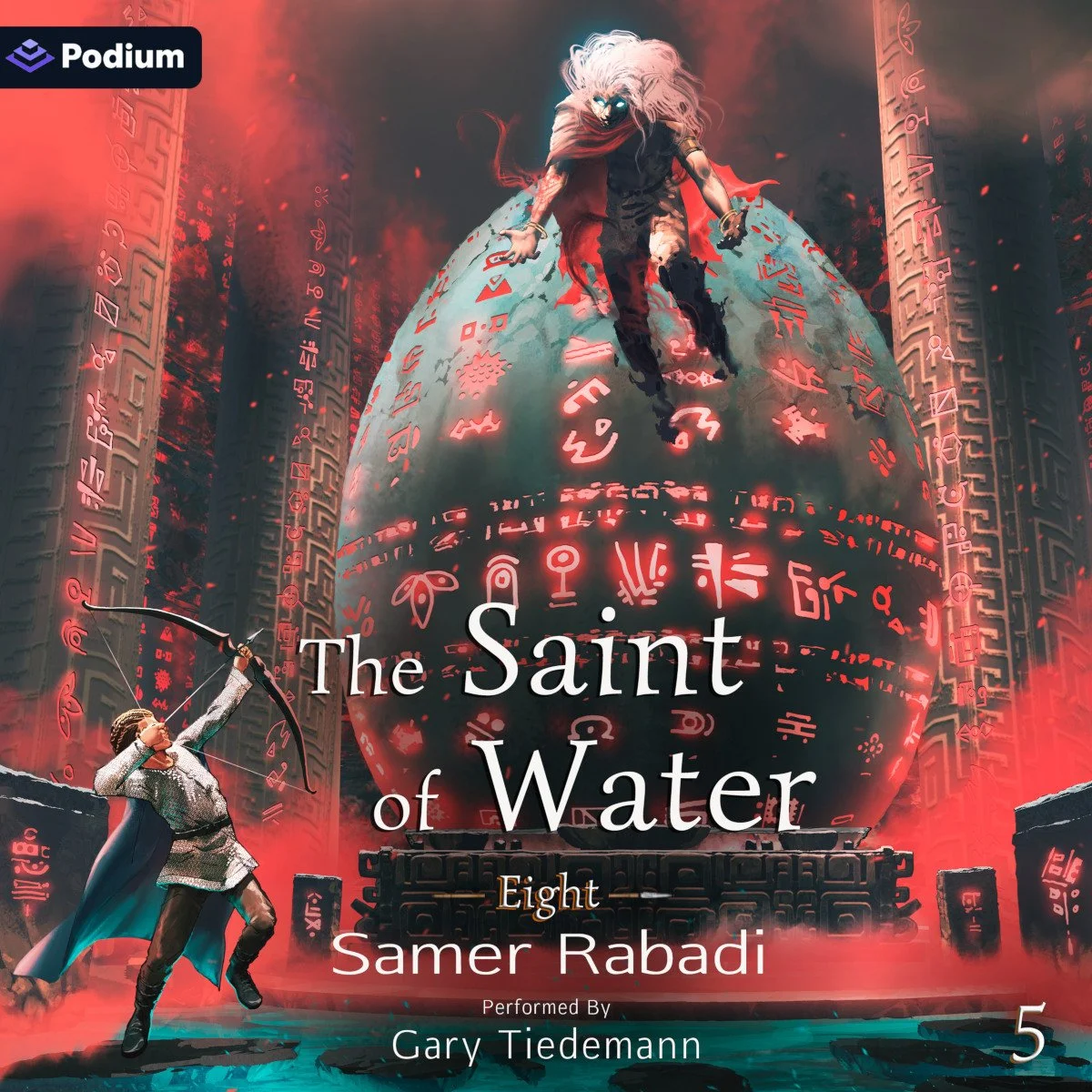
The pre-order page for the Eight 5: The Saint of Water audiobook is now live. It’ll publish on August 18, 2026.
We once again have the amazing Gary Teidemann performing, and it’s a rousing conclusion to the series. Head on over to Audible to check it out.
Fate’s Attendant Audiobook Available Now
The Fate's Attendant audiobook is out on Audible! 🎉
This is a fantasy series with LitRPG elements, featuring a veteran protagonist, a mysterious system, and a measured rise in power where cunning matters as much as strength. Check it out if you’re interested in a fantasy mash-up of mystery and xianxia genres.
Jason Vu narrates, and he sounds awesome!
Why Do LitRPG Heroes Cheat?
I wrote recently about the hidden appeal of LitRPG.
TLDR: It’s because the genre offers a comprehensible path to power in contrast to real-world systems that are opaque and rigged. Even when RPG systems are antagonistic, their mechanistic nature is still more attractive than what’s available to the average person.
In response to the essay, several commenters noted that many LitRPG protagonists cheat, even when a fair system is in place. While there are characters like Dungeon Crawler Carl who survive because of their cleverness and grit, there are also examples like Eight, who is given a couple of key blessings early in the story just because he happened to die in the right place and get a god’s attention that way.
By the way, I can say that about Eight without offending the author, because that’s me.
Wait—so if the whole appeal of LitRPG is a fair system, why do we accept (or even enjoy) protagonists who bypass that fairness? Isn't that defeating the point?
Below is what comes to mind:
Heroes need to feel special—something to indicate they’re meant for greatness. This is true for every story, not just LitRPGs. For example, Luke Skywalker lived on a backwater planet. He could shoot a womp rat like nobody else, but that didn’t mean anything on a galaxy-wide scale until two cheats changed his destiny. The first was his hidden parentage. The second was the coincidental arrival of two droids on Tatooine who would go on to reconnect him to that lost heritage.
In a LitRPG setting, specialness often equates to advantage, and since the system is usually the framework through which character advancement happens, this advantage often manifests as lucky circumstances, unique character traits or class professions, or clever exploitations of the system.
For example, Randidly Ghosthound used a bad starting location at the beginning of a system apocalypse as an opportunity to build himself up. In my Fate’s Attendant, Hong Fei found a deck of cards that let him advance his cultivation. There continued to be still life and death struggles, very much so, but the alternate route to power was absolutely necessary to survive the challenges he faced.
Cheats also give protagonists cool toys to play with, which is another way of making the characters special. Within the familiar playground of genre conventions, this novelty matters. Like putting lasers on a t-rex—what’s cool suddenly becomes cooler.
I’m currently reading a web serial entitled Millenium Witch. The main character isn’t particularly strong or smart. What she has going for her instead is immortality, and that’s a huge cheat when learning magic. She leverages time into power, eventually becoming the equivalent of an archmage.
The author could’ve written a more traditional rise to power, but the cheat’s inclusion adds nuance to the story—the grind, the loneliness, etc. The eventual overpowered nature of the main character hits differently as a result of these circumstances.
These advantages might seem to contradict the appeal of fair systems, but readers often want both: the satisfaction of watching someone master the rules AND the cathartic fantasy of overwhelming power. The cheat accelerates the timeline so readers get both experiences within a single framework.
It is possible to write about an ordinary shmoe who becomes a powerhouse through grit and perseverance, but that’s a long, slow burn. Which may not be good enough for readers looking for quick hits and fast-paced adventures.
Also, in a crowded marketplace, authors need hooks. A unique cheat, like a necromancer who levels by dying or a cultivator with backward meridians, becomes part of the story's identity. It's creative differentiation, a way of finding a niche and standing out.
So maybe the fairness of LitRPG systems is only part of the appeal. In that context, cheats become another variable in the equation, another tool to understand and optimize. The system remains dependable even when protagonists game it. That's the real fantasy: not a world without advantages, but a world where advantages follow understandable rules instead of arbitrary gatekeeping.
I’m still considering the ideas above, so if you have any thoughts to share, please do. This is a topic I want to continue exploring.
And if you’d like to read thoughtfully written stories about underdogs who have to earn their victories even when advantages are present, about found families, and about meaningful character growth, then please give my Eight and Fate’s Attendant series a shot.
Thank you for time and attention!
The Hidden Appeal of LitRPG
TLDR: LitRPG is appealing because it offers a comprehensible, fair system in contrast to real-world systems that are opaque and rigged. Even when the RPG system is antagonistic, its mechanistic nature is still a more attractive route to power than what’s available to the average person.
To dig into the idea further, keep reading.
Firstly, let’s start with a brief definition, a place to get us started:
LitRPG is a genre of science fiction and fantasy which features characteristics typically found in role-playing games, like Dungeons & Dragons and World of Warcraft. The stories usually involve at least one character who has access to an advancement system consisting of things like levels, classes/professions, attributes, skills, and/or other ways of quantifying human potential. The storylines often make progression through this advancement system a main feature of their appeal.
The key word in the above definition is advancement. Whether the RPG system is friendly, neutral, or even antagonistic, its mechanical nature creates a dependability that scrappy protagonists can make use of. Whether it’s through hard work, their mastery over games, or using cleverness to identify weaknesses to exploit, the system becomes an avenue for growth.
That’s unlike the real world, where a person can easily feel their hard work, their mastery over the things they care about, and their cleverness in overcoming problems don’t matter. Where those things aren’t recognized. At least not by those who do matter: the ones who run the real-world systems, like the bosses, the politicians, the religious leaders, etc.
This underlying lack of faith in real-world systems is what makes fantasy-RPG systems so attractive. Swing a sword a thousand times, and you unlock a special class or achievement that will then let you go on to defeat the monster outside of town, which in turn will lead to recognition by the mayor, who perhaps will send you on a special quest. You get the idea.
Essentially, the hero begins the story with everything they need for their efforts to matter. Through the RPG system, they can bypass whatever restrictions may be placed on them by society due to lack of status, wealth, education, etc.
For example, in Dungeon Crawler Carl, Carl succeeds not because he's inherently special, but because he learns the system's rules and exploits them ruthlessly—something theoretically anyone could do if the playing field was honestly level.
The way to move the story forward is through growth, and the RPG system is an ally in that process, even when it’s antagonistic. Because an antagonistic RPG system is still more dependable than our real-world one. Just ask all the small-business owners who—no matter how much they sweated for it—went bankrupt because they couldn’t compete against the giant corporations down the street.
LitRPG is often described as escapist power fantasy, but I think that’s doing a disservice to the genre. Given the above, it’s clear that escapism is baked into it, but in the sense that readers are expressing dissatisfaction with the status quo. The desire to succeed and do better is being expressed through the characters on the page, in the same way that stories have done for centuries.
Humans are storytellers by nature. Historically, it’s one of the main ways we teach and learn. And more recently, it’s how we dream of what can be.
I'm not suggesting RPG systems are the solution to real world problems, but their popularity suggests that the current real-world system isn’t cutting it for many, that they’re looking for something more dependable.
The other argument I often hear is that LitRPG is only appealing because of the dopamine hits that come when “the numbers go up.” I won’t deny that those moments are legitimately satisfying, but they’re also more than chemical manipulation. Those dopamine hits are a symptom of the dependable progression, not the core draw.
Otherwise, why read LitRPG when you can watch TikTok videos instead? That delivers dopamine hits faster and with less effort. The fact readers choose LitRPG, which requires sustained attention and investment, suggests they're after something deeper than just chemical stimulation.
At this point, you may be thinking, “Is Samer saying that LitRPGs are just power fantasies for people who feel powerless?”
My answer to you is no. That’s not the case at all. Because stories are one of the ways by which humans learn how to develop agency. We find many of our heroes in fiction. They can inspire us to do more than dream by showing us how to make meaningful choices and imagine the results of those choices. We internalize these patterns and can eventually learn to recognize similar opportunities in our own lives.
The desire for a fair, comprehensible system is meaningful rather than juvenile. And even if we don’t live in that kind of world, we can still strive to create fairer systems and ensure hard work actually leads to opportunity.
All the above is rather heady, so let me conclude by saying this: LitRPG is also fun. The genre, by its nature, is meant to be enjoyed. And hopefully, if the story is well written, there’s substance under the chemical wash of neurotransmitters. Under the fantasy, there are truths about humans overcoming the worst obstacles.
I love the genre, and I absolutely have a blast writing in it. If you haven’t already, give it a shot. Below are some places to start:
Dungeon Crawler Carl by Matt Dinniman is a series of adventures heavily dosed with humor and heart.
He Who Fights with Monsters by Shirtaloon mixes Australian snark with clever system exploitation.
The Wandering Inn by pirateaba is a slice-of-life epic where an innkeeper builds a community around her.
You’re also welcome to try my own work:
Eight is the story of an old man who wakes up in an eight-year-old body on a dangerous world and must survive using experience, not power.
Fate’s Attendant starts with a broken soldier, a mysterious card deck, and a giant badger named Auntie Ling, then shifts into a cultivation fantasy where cunning matters as much as strength.
And these are a few of my favorites in the genre:
Bog Standard Isekai by Miles English features a protagonist who tears through portal fantasy tropes with style.
Oh, Great! I was Reincarnated as a Farmer by Benjamin Kerei is a wholesome comedy about a min-maxer who discovers how farming can be a viable build.
Azarinth Healer by Rhaegar has lots of combat and progression, featuring a healer who gets stronger through fighting.
Jake's Magical Market by J.R. Mathews stars a protagonist who starts his journey by running a magical business.
Enjoy!
Celebrating With Cake
One of the ways we celebrate a book's birthday in our household is with cake!
In this case, it was chocolate and strawberry ice cream inside, since the cake was made by our local Baskin-Robbins. The illustration on top was printed on edible paper.
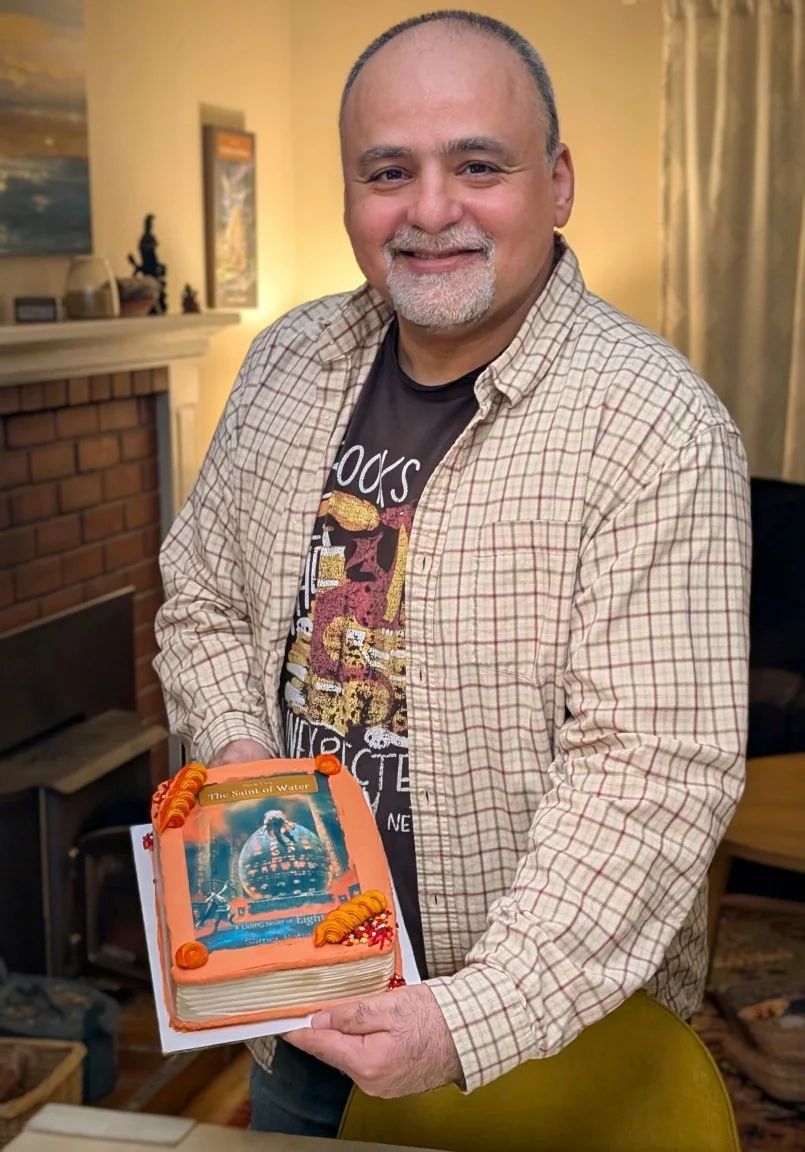
Fun, right?
It would've been wasteful to get two cakes this week, so I think we'll wait for the audiobook release to get one for Fate's Attendant.
Thankfully, the results so far have been worth celebrating. Eight 5: The Saint of Water has been a #1 Bestseller from almost the moment the page opened for pre-orders, and it's held that spot since.
As for Fate's Attendant, some readers have shared their reviews, and they are so nice. Truly warming this author's heart.
In other news, I'm about three-quarters through the first draft of the Fate's Attendant sequel. From the very beginning, the story has taken me from one unexpected direction to another. It's been a fun ride so far, and I can't wait to share it with you.
Thank you for your support. No story is complete without its readers!
Pre-Order Fate’s Attendant & Eight 5
Hi friends,
Here are the pre-order links for Fate’s Attendant and Eight 5: The Saint of Winter, with both books publishing on Monday, February 23, 2026. And in case you haven’t seen the covers yet, they’re amazing!
P.S. A paperback version of Fate’s Attendant will become available to order on publication day.
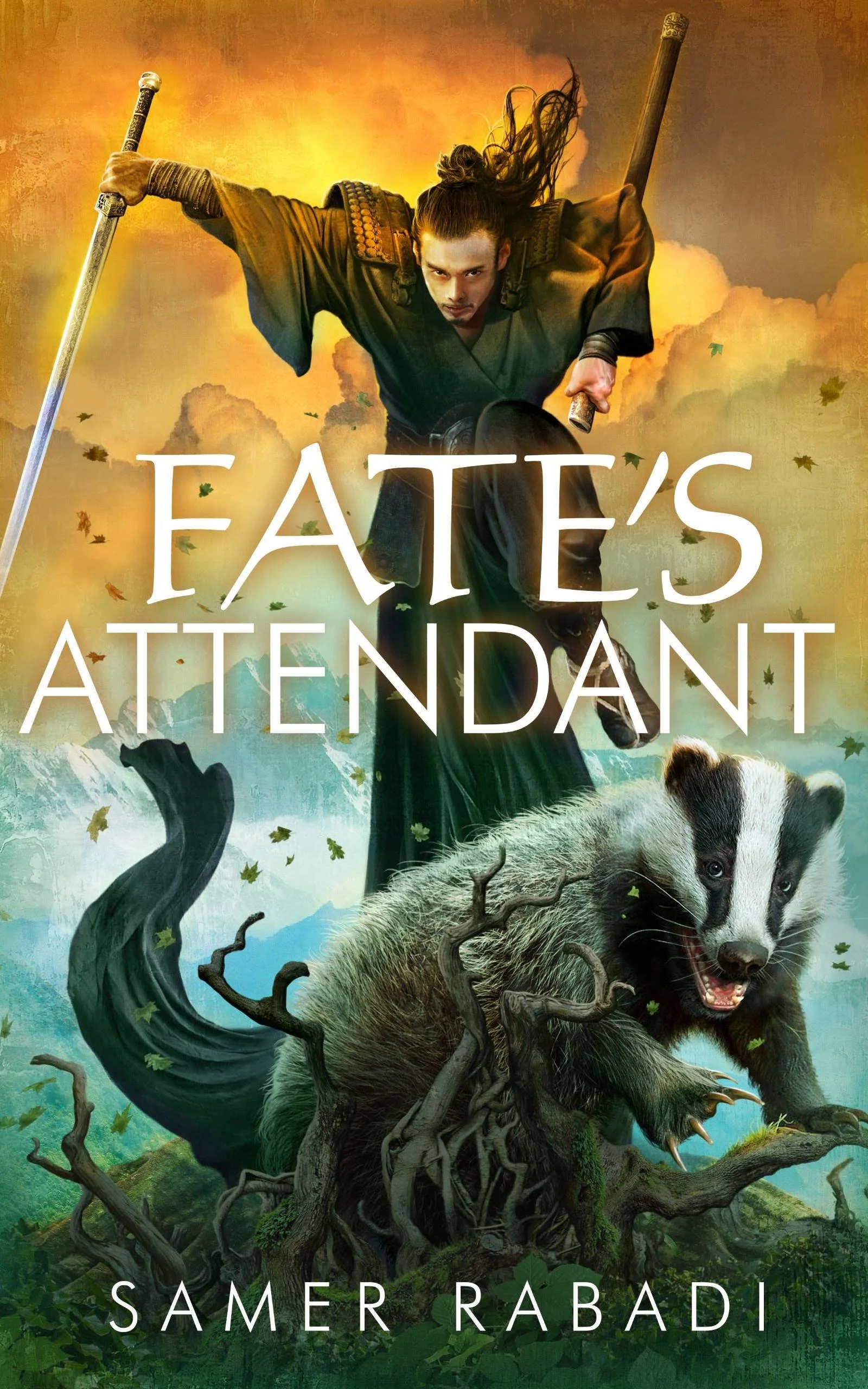
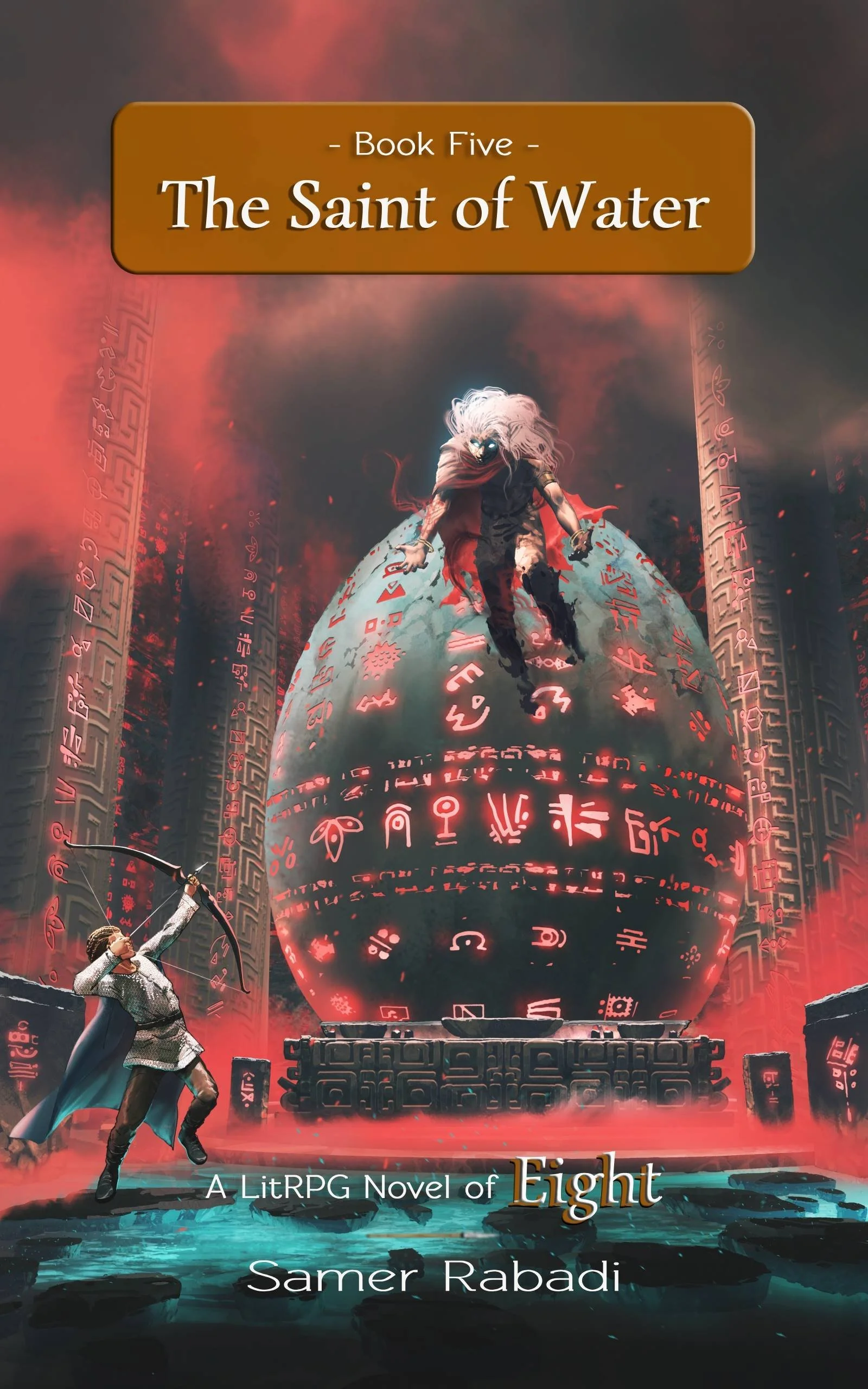
Eight 5 & Fate's Attendant Launch: 2/23/26
I'm alive! It's been quiet since my last update, but that’s because I've been heads-down editing to get Eight 5 and Fate's Attendant ready.
The Release Date
Both books will publish on the same day: Monday, February 23, 2026.
And I can finally reveal the title that brings Eight's journey to a close—Eight 5: The Saint of Water.
I'll share pre-order links as soon as they're live. Please keep an eye out.
Cover Artist Reveal
I'm also thrilled to announce that Alejandro Colucci is illustrating the cover of Fate's Attendant. His work has graced books by Ursula K. Le Guin, William Gibson, Anne Rice, Robin Hobb, and many others. What I've seen so far is stunning, and I can't wait to share it with you.
What's Next
I'm about halfway through the first draft of Fate's Attendant Book 2. If you'd like early access to these manuscripts as they're being written, you can find them on my Patreon.
Thank you for your patience and support while I've been in the editing trenches. February is going to be an incredible month.
February 2026 Double Release
I have some exciting news to share—actually, a lot of exciting news. 😊
The Big Announcement: February 2026 Double Release
Both Eight 5 and Fate's Attendant will be releasing together in February 2026. I'm wrapping up developmental edits on Eight 5 and sending it to my line editor next week. The first draft of Fate's Attendant is also coming along nicely and heads to the editor in early December. After months of writing, revising, and polishing, it feels incredible to see both stories coming together.
Cover Art Updates
Tithi Luadthong is illustrating the cover for Eight 5, and I couldn't be more excited. He's done such remarkable work for the previous books, and I know he'll bring something special to this final chapter. I'll share a sneak peek as soon as it's ready.
For Fate's Attendant, I'm still searching for the perfect illustrator—someone who can capture Hong Fei's weary gallantry. It's been challenging, but I'm determined to find the right fit. If you know someone who specializes in character-driven fantasy art, please send me a message with the recommendation.
New Merch Available
If you're looking for a way to celebrate Eight's world, there's now official merch! You'll find:
Adorable stickers of young Eight, Ikfael eating a donut, and a proud Snow
A "Questing for Donuts" mug
T-shirts featuring all the book covers
Check them out in the store.

Aren’t these stickers adorable?
Looking Ahead
February is going to be quite the month—saying goodbye to Eight's journey while welcoming Hong Fei's story. I'm grateful to have you along for both.
As always, thank you for your support. It means the world.
Two Stories, One Amazing Journey
It’s been two months since the transition to writing full-time began, and it's been a wild ride so far.
I've settled into a rhythm that I never could have imagined in my old life: writing Fate's Attendant in the mornings and editing Eight 5 in the afternoons. The ability to focus on just writing (with some job hunting thrown in sporadically) has been absolutely priceless for thinking deeply about the characters and the events in both books. As a result, I'm finding it harder and harder to imagine the return to the everyday grind of my former professional life. Writing is hard—it takes a ton of energy—but I'm starting to think I wouldn't trade it for anything.
Eight 5's progress: I'm near the end of an initial developmental-edit pass. My followers on Patreon provided some feedback that I’m currently working to incorporate. The results are good so far, and I expect to hand the manuscript off to my developmental editor by the end of next week.
Fate's Attendant update: Hong Fei's story is finding its groove. He's navigating the treacherous politics of the Yu household while discovering what his mysterious cards can really do, and the reception has been incredible. The story made it to #15 on Royal Road's Rising Stars list with near-universal 5-star reviews. It’s also surpassed a thousand followers—a great start to the journey!
Looking ahead, I'm excited about where both stories are heading. Hong Fei has some major revelations coming up, and getting Eight's ending right feels like the perfect send-off for that series.
As always, thank you so much for your support. I've been telling folks that a book is incomplete without readers, and that's never felt truer than now.
Life Changes & Two Novels in Progress
Hey y’all.
I have some big announcements to share.
First is that I’ve been recently laid off from my job. It wasn't exactly how I planned to make the transition, but I've been thinking about writing full-time for a while now, and I’ve decided to embrace this moment as an opportunity to test what writing full-time looks like while simultaneously looking for my next job.
I've been incredibly fortunate in my career, working for some amazing organizations. Finding something equally wonderful will likely take time—probably 4-6 months based on previous experience—but that gives me a perfect window to explore writing full-time.
What this means for Eight:
The first draft of Book 5 is done, and I’m reading through it now to identify the structural changes I’d like to make before handing it over to my editors. This is the last one in Eight’s story, and I want to make sure I do it right. That said, if you’d rather not wait and don’t mind reading a first draft, then head over to my Patreon. All forty chapters are there.
With Eight’s story coming to an end that means there’s room for something new, right?
Introducing Fate's Attendant:
I'm launching my next series. This new project combines xianxia and LitRPG genres. It's actually a story I've been developing for a couple of years now. I originally planned to start it after New Blood, Old Bones, but decided Eight deserved to complete his journey first.
The main character, Hong Fei, has been waiting patiently for me to begin his story, and I can't wait for you to meet him.
Fate’s Attendant is currently in progress with chapters published three times per week. You can read it on Patreon and Royal Road. 😊
Finally, I’ll close by saying that if the writing proves as productive and sustainable as I hope, I will likely make this transition permanent. Either way, I'm excited about having more time to spend in these worlds we love and to share more stories with you.
Thank you for being a part of this journey.
Eight 4 Coming to Audible May 27th
I'm excited to announce that Eight 4: New Blood, Old Bones audiobook is coming to Audible, and the pre-order page is now available. We're also lucky to have Gary Tiedemann narrating once more.
The audiobook will publish on May 27th. For those who haven't read the blurb yet, it's below.
-----
Now sixteen years old, Eight is a fixture in both the Glen and Voorhei, helping to defend his adopted homes from the relentless monsters drawn by the Deer God's influence. Yet, peace is fleeting in a world where magic and danger intertwine.
The arrival of Aslishtei's nieces brings an unexpected proposition: an expedition to Old Baxteiyel. The hierophant of Albei has turned the ruins into the site of a deadly race, pitting teams against one another to claim the treasures hidden within. But Aslishtei's nieces have a different plan. For them, the race is a distraction—a cover for their true goal of uncovering the secrets of the fabled Arc of Knowledge within the ruins.
The journey is fraught with peril. Dark warriors guard Old Baxteiyel's mysteries, and the Maltran Empire's agents lurk in the shadows, intent on sabotage and spreading chaos. As Eight and his team delve into the ruins, they face battles not only with the ruins' defenders but also with their own doubts and desires. For Eight, the expedition is more than an adventure; it's a confrontation with his growing yearning for the unknown and the toll it takes on those he loves, particularly Ikfael, who cannot stray for long from her territory.
The clash with Baxteiyel's dark warriors changes everything. The choices made and bonds tested in the ruins send ripples far beyond the battlefield, leaving Eight to grapple with the aftermath and the profound shift in his relationship with Ikfael.
Eight: New Blood, Old Bones is a tale of daring exploration, cunning strategies, and the sacrifices demanded by ambition and love. The ruins hold secrets that could reshape the world, but at what cost? Join Eight on his most dangerous journey yet, where every step challenges not just his strength, but the very foundations of his life.
Eight 4’s Book Birthday
Today is the book birthday of Eight 4: New Blood, Old Bones! 🎉🎂🎉
It’s currently available on Kindle and Kindle Unlimited, with an audiobook forthcoming on Audible in 2025.
Eight 4 Available for Preorder
It’s confirmed… Eight 4: New Blood, Old Bones which will publish on December 5th!
I’ve updated the Books section of this site with the summary, but it’s also here for your convenience:
Now sixteen-years old, Eight is a fixture in both the Glen and Voorhei, helping to defend his adopted homes from the relentless monsters drawn by the Deer God’s influence. Yet, peace is fleeting in a world where magic and danger intertwine.
The arrival of Aslishtei’s nieces brings an unexpected proposition: an expedition to Old Baxteiyel. The hierophant of Albei has turned the ruins into the site of a deadly race, pitting teams against one another to claim the treasures hidden within. But Aslishtei’s nieces have a different plan. For them, the race is a distraction—a cover for their true goal of uncovering the secrets of the fabled Arc of Knowledge within the ruins.
The journey is fraught with peril. Dark warriors guard Old Baxteiyel’s mysteries, and the Maltran Empire's agents lurk in the shadows, intent on sabotage and spreading chaos. As Eight and his team delve into the ruins, they face battles not only with the ruins’ defenders but also with their own doubts and desires. For Eight, the expedition is more than an adventure; it’s a confrontation with his growing yearning for the unknown and the toll it takes on those he loves, particularly Ikfael, who cannot stray for long from her territory.
The clash with Baxteiyel’s dark warriors changes everything. The choices made and bonds tested in the ruins send ripples far beyond the battlefield, leaving Eight to grapple with the aftermath and the profound shift in his relationship with Ikfael.
Eight 4: New Blood, New Bones is a tale of daring exploration, cunning strategies, and the sacrifices demanded by ambition and love. The ruins hold secrets that could reshape the world, but at what cost? Join Eight on his most dangerous journey yet, where every step challenges not just his strength, but the very foundations of his life.
Eight 4 Date Slip and Cover Reveal
I’m sorry, y’all, but I was apparently too ambitious in setting the publication date for Eight 4. The editing process took longer than expected, and the release date is now Thursday, December 5th. A link will be shared as soon as the book’s page goes live on Kindle Unlimited.
To help make up for the gaffe, I’m offering a sneak peek at the title and cover. The art style should be familiar now; it’s once again the work of the amazing Tithi Luadthong.

New Blood, Old Bones was a lot of fun to write, and I can’t wait for y’all to read the book.
Eight 4 Coming November 2024
Today is a big day—I handed the draft of Eight 4 to my editor for line edits. I also scheduled time with the copy editor, so that means we have a time frame for when the book will be published. Expect to see it on Kindle Unlimited by mid-to-late November!
The title is Eight 4: New Blood, Old Bones.
That’s it for now. I’ll post again once the cover is ready and/or a firm release date has been set.
Eight 3 Audiobook: March 12

I'm thrilled to share the news that the audiobook version of Eight 3: Undaunted is set to publish on March 12. We’ll even have the incredible Gary Tiedemann narrating once again.
Every chapter promises an adventure, and whether you're revisiting the story or stepping into Eight 3: Undaunted for the first time—the audiobook brings a new dimension to the tale, with every emotion, twist, and turn brought to life through the power of Gary’s voice.
Pre-orders are now available on Audible, so mark your calendars.
Thank you for your support, and happy listening!
Eight 4 Under Way

I’m so, so pleased with how well Eight 3: Undaunted has been received. Shortly after launch, the book hit the number-one slots on three separate genre lists. My gratitude goes out to everyone who purchased it or read it on Kindle Unlimited. Y’all are the best.
All that’s left for the book is to wait for the audiobook publisher to set a release date for that version. Everything has been submitted, so it’s a matter of coordinating production schedules and finding a good spot in their publishing calendar. I’ll share the pre-order information once it becomes available.
I don’t have a role in any of that, so I’ve turned my attention to writing Eight’s fourth book. All the planning is done—mostly work on characters and setting—and I’m now three chapters deep into the story. Well, that’s still the shallow end of the pool, but the early indicators are that it’s going to be a fun story to write.
If you’re curious, you’re welcome to check out my Patreon page. I post the first drafts of chapters there.
That’s it for now. Thank you again for all your support; it means the world to me.
Eight 3 Pre-Order Information
It's been a busy couple of months since my last update. Both line and copy edits on Eight 3: Undaunted are now complete, and all that's left is e-book formatting. Given how quickly that process is going, I feel comfortable moving up the publishing date to October 12, 2023.
That's right—Eight 3 is now available for pre-order!
By the way, I've once again commissioned Tithi Luadthong for the book's cover. We went through so many revisions to get it just right, but the effort was well worth it, I think. You can see it below.
That’s it for now. Until next time!

Update on Eight 3
It's been a while since my last blog post, but I've been working steadfastly on the third novel in Eight's story. The first draft is now finished, however, and the manuscript is currently in the hands of my editor. I'm expecting it back any day now.
The official title is Eight 3: Undaunted.
I’m aiming to publish the book for Kindle Unlimited in October. That's an ambitious timeline, especially since I'm juggling a full-time job alongside my writing, but I'm determined. I’ll know more once I see how heavily marked up the manuscript is.
In other news, I've committed to diving straight into "Eight 4" after Undaunted publishes. Essentially, I’ll be rolling from one book to the next.
That's all for now. Just a brief update to keep you in the loop. Thank you for your continued support, and stay tuned!
Writing as a Practice for Recognizing What’s True
I was recently asked an interesting question by one of my patrons, Lhexa: "You mentioned on Twitter that you write in order to have fun and to learn truths. Would you elaborate? I find this thought intriguing, since I catch the occasional insight from Eight the book series."
Here’s my response, focusing on the “truths” part of the question since that’s where the interest seems to be:
As I’ve mentioned elsewhere, I’m a discovery writer, and the way I accomplish that is by setting the scene and then treating my characters as if they were real people. I do my best to observe them and their surrounds objectively, becoming their documentarian.
The effects of this process are several:
First, it gives my subconscious the space it needs to generate ideas, details, and directions my conscious mind isn’t clever enough to develop on its own. And, relevant to Lhexa’s question, it also tends to create perspectives I wouldn’t normally consider. I’m able to put myself in my characters’ places, and dig into their issues.
An easy example from Eight is how Ollie grapples with being a widower. His experience has allowed me to confront my own fears around mortality and the thought of losing someone I love. Fortunately, my wife and I are in good health, but because I love her dearly, I can’t help worrying about misfortune. Writing about Ollie’s feelings has provided me a safe way to examine my own.
A step removed are the mindsets and cultural norms of the people of Diaksha. They appear to be necessary to survive on a fundamentally hostile world, but are they? Maybe yes, maybe no—I don’t have the answer, but I do find that exploring events through their points of view helpful for understanding our own world.
Obviously, there are limits. It’s extremely hard, if not impossible, to fully understand another’s perspective if their life experiences are radically different. I make my best effort, though.
So far, there’s nothing groundbreaking here—writers have done what I’ve described for centuries—and it's probably true for this next bit too: Writing also allows me to tap into the wisdom of my characters. By being creative and letting my characters be themselves, they surprise me with their actions and words. Their bravery, their debates, and even their mistakes are all grist for my mill. In a way, it’s like having an advisory board—one that communicates through modeling behaviors and simulating the consequences of decisions.
Again, there are obvious limits—predictions and reality frequently don’t align—but writing creates more opportunities for me to be insightful, harnessing more of my mind to the task than normally available.
Finally, one of the most valuable lessons that writing has taught me is the importance of stepping back and examining my own thoughts and preconceptions. Since I strive to be a neutral observer in my writing, it requires me to get out of the way of the story. I’ve worked to hone a sense for what’s real for my characters, which in turn has carried over into my non-writing life, i.e., learning how to recognize when my thoughts are clouding my judgment.
Don’t get me wrong—I’ve mucked up a lot in my life, but I’ve also gotten better over the years at catching on quicker when it’s happening and correcting course. With discipline and practice, I’ve found writing to be a powerful tool for learning to filter for my own truths, to recognize when certain things ring true.
If the above sounds a lot like mindfulness meditation, I do that too. The two practices are complementary.
So, writing is a way for me to understand what’s real, both for my characters and for me, and I’m grateful for the lessons it’s taught me. If the above all sounds incredibly earnest, it’s because it is. But I also have fun too. I’m at the edge of my seat as I write the stories, anticipating like everyone else what’s going to happen next.